/main.jpg)
Pricing
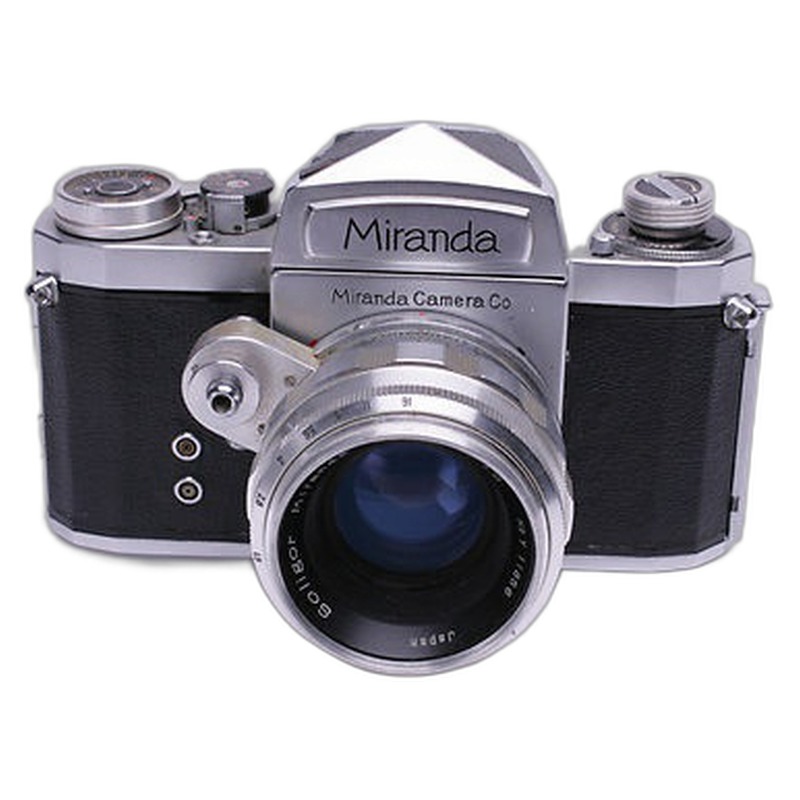
Miranda T (Miranda, black)
Miranda · Japan · 1954–1956 (2 years) · 135 film
The Miranda T represents an early effort by the Japanese manufacturer Miranda to enter the competitive 35mm SLR market established by European brands in the post-war era. Produced between 1954 and 1956, this black-bodied camera offered photographers a more affordable alternative to high-end European models like the Contax II or Leica III. Its core functionality included a coupled rangefinder system for focusing, interchangeable lenses, and through-the-lens viewing, providing the essential features of a serious 35mm system camera without the premium cost. While not revolutionary in design, it demonstrated Japan's growing capability to produce mechanically competent camera bodies that challenged the dominance of established European manufacturers. The Miranda T's straightforward, functional design reflected the practical demands of amateur and professional photographers seeking reliable equipment without excessive expense.
As an early Japanese SLR, the Miranda T prioritized robust metal construction and essential features like a rapid-wind lever and flash synchronization. Its significance lies primarily in its role within Miranda's initial product line and its contribution to the broader trend of Japanese camera manufacturers gaining market share through accessible quality. It lacked the advanced mirror systems and later technological innovations of its more sophisticated successors within the Miranda lineup, positioning it as a capable, but not groundbreaking, entry point for photographers adopting the SLR format during the mid-1950s.
Specifications
| Film Format | 135 |
/main.jpg)
_Sample/main.jpg)
/main.jpg)
_'Sample'/main.jpg)
_black/main.jpg)
 Enjoy this museum? Support on Ko-fi