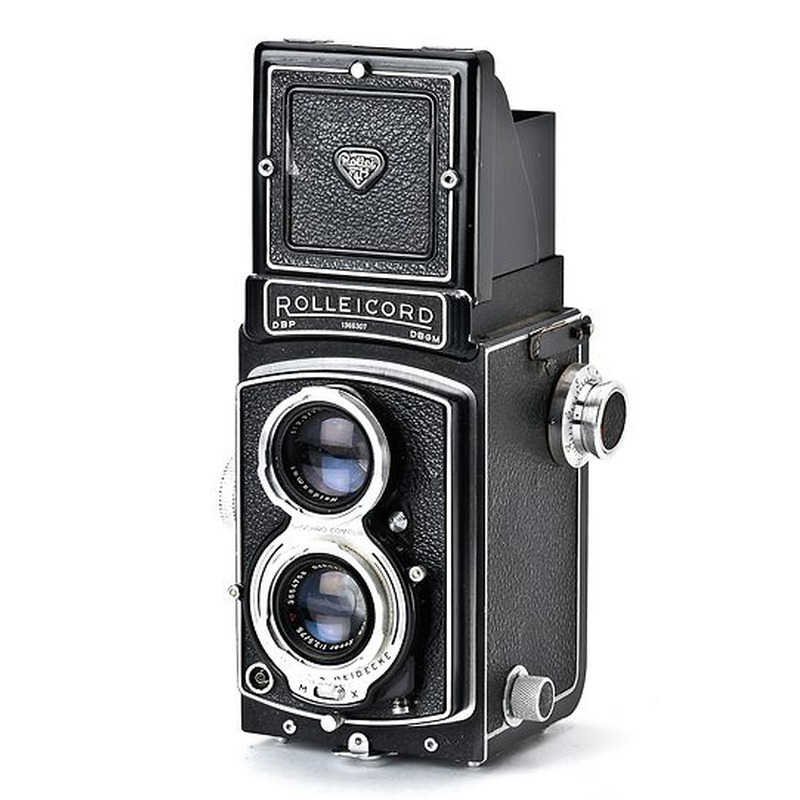
Rolleicord IV
Rollei · Germany
The Rolleicord IV represents a significant step in making medium format twin-lens reflex (TLR) photography more accessible. As part of Rollei's Rolleicord line, it served as a more affordable alternative to the prestigious Rolleiflex models, targeting enthusiasts and serious amateurs rather than professionals. Maintaining the core TLR design principles – viewing through the top lens and exposing through the bottom – it offered the advantages of medium format negatives (typically 6x6 cm) in a simplified, lower-cost package. This iteration likely incorporated refinements over earlier Cord models, improving ergonomics or features, solidifying Rollei's dominance in the consumer TLR market during its era. Its purpose was clear: to deliver quality twin-lens reflex imagery without the premium price tag of the flagship Rolleiflex cameras.
Rolleicord IVs are characterized by their robust, all-metal construction typical of Rollei products, featuring a simple but effective focusing mechanism and a reliable leaf shutter. They generally sported a triplet or tessar-type lens and a basic finder screen. While sharing the iconic twin-lens silhouette with its more sophisticated sibling, the Rolleicord IV lacked advanced features like interchangeable lenses or complex meters. It was a workhorse camera designed for dependable operation and straightforward photographic results, embodying the "people's Rollei" ethos. Its legacy lies in enabling countless photographers to experience the unique TLR format and quality medium format offered at a reasonable cost, contributing significantly to the popularity of 6x6 photography in the mid-20th century.
/main.jpg)
/main.jpg)
 Enjoy this museum? Support on Ko-fi