_(export)/main.jpg)
Pricing
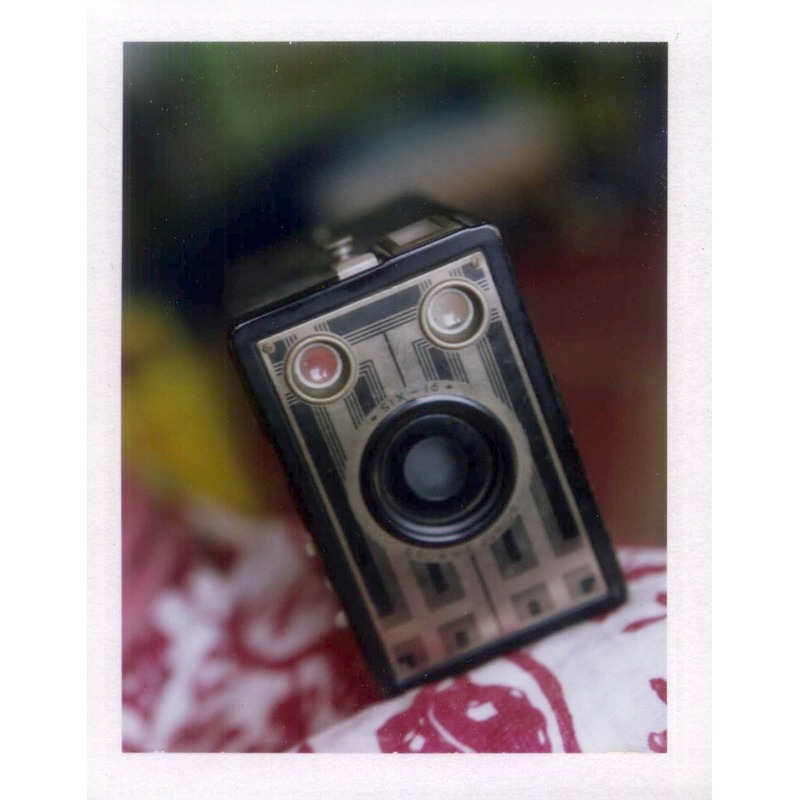
Kodak Six-16 Brownie Junior (US) (export)
Kodak · USA · 1934–1942 (8 years) · 135 film
The Six-16 Brownie Junior (US) (export) represents a significant, if modest, step in Kodak's democratization of 35mm photography. Marketed from 1934 to 1942, it was essentially Kodak's first dedicated 35mm camera marketed under the venerable Brownie brand name, aimed squarely at the budget-conscious consumer segment. Despite its name referencing the earlier 616 film format, this camera uniquely utilized standard 135 (35mm) cartridge film, making it one of Kodak's earliest attempts to bring the now-standard format to a mass audience through its most accessible brand. Its design was intentionally simplified, featuring a basic Bakelite body with minimal controls – a single speed shutter, fixed focus lens, and simple frame counter – embodying the "point-and-shoot" philosophy that defined the Brownie line. Production continued through the early years of World War II, indicating its role as a staple consumer product during that period.
As an export model distinct from any contemporary Six-16 cameras using 616 film, this Junior variant served as a bridge between Kodak's traditional roll film Brownies and the more sophisticated Retina line. Its primary innovation was not technical sophistication but accessibility, offering 35mm photography at a fraction of the cost of German imports like the Leica or Contax. While lacking the precision or features of contemporary European rangefinders, the Six-16 Brownie Junior (export) succeeded in making the advantages of 35mm film – smaller size, standardized processing – available to a broader market through Kodak's massive distribution network and brand recognition. It stands as a practical, unassuming artifact of Kodak's strategy to capture the burgeoning 35mm market with an affordable, user-friendly product.
Specifications
| Film Format | 135 |

/main.jpg)
/main.jpg)
_(black)/main.jpg)
_(brown)/main.jpg)
 Enjoy this museum? Support on Ko-fi