Pricing
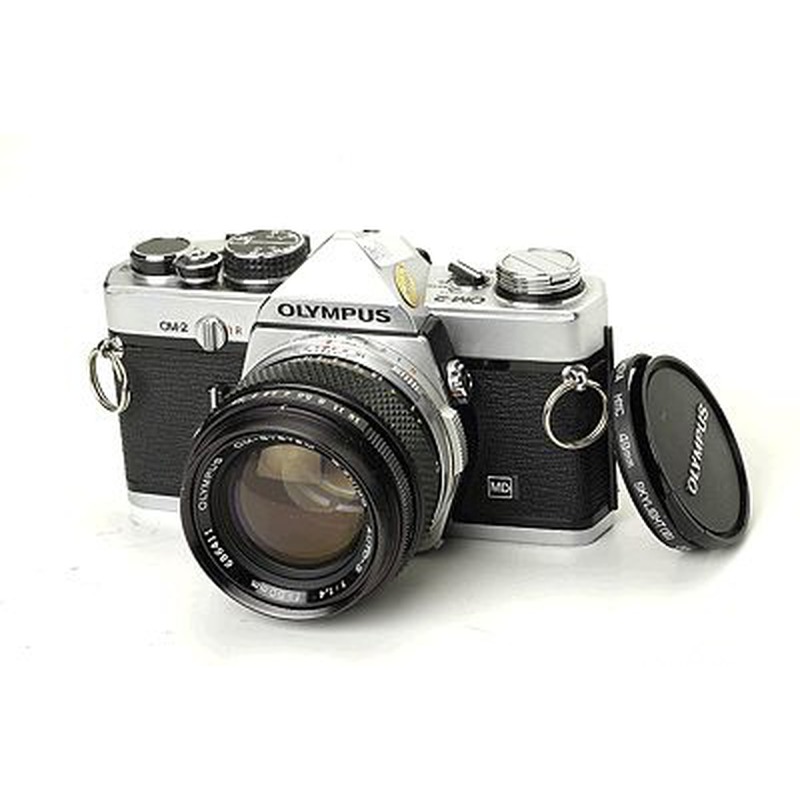
Olympus OM-2
Olympus · Japan
The Olympus OM-2, introduced in 1975 as a successor to the revolutionary OM-1, redefined the 35mm SLR landscape by merging professional capabilities with unprecedented portability. Designed under the leadership of chief engineer Yoshihisa Maitani, the OM-2 embodied a philosophy of compactness without compromise, featuring a titanium and alloy chassis that felt robust yet weighed significantly less than contemporary rivals like the Nikon F series. Its standout innovation was the through-the-lens (TTL) off-the-film (OTF) metering system for flash photography—a groundbreaking technology that measured light reflected directly from the film surface during exposure, enabling unprecedented accuracy in flash synchronization. This, combined with aperture-priority auto-exposure and a top shutter speed of 1/1000 second, made it a versatile tool for photojournalists and studio professionals alike. The OM-2's ergonomic design, intuitive controls, and compatibility with Olympus's acclaimed Zuiko lenses solidified its reputation as a workhorse for demanding shooting conditions. It gained widespread adoption among renowned photographers, including Sebastião Salgado, who relied on its reliability for documentary projects, and astronauts who used modified OM-2s aboard Skylab for space photography, cementing its status as a genre-defining instrument.
The OM-2's legacy extends beyond its technical prowess to its cultural impact. It catalyzed a shift toward smaller, more manageable SLRs, forcing established brands to rethink their designs. Despite sharing its compact frame with the OM-1, the OM-2 introduced advanced electronics and a mirror-lockup function for vibration-free macro photography, pushing creative boundaries. Its production run spanned two decades (1975–1984) with incremental improvements, reflecting Olympus's commitment to refinement. The camera's enduring appeal lies in its blend of mechanical precision and innovative automation, proving that groundbreaking technology could be both accessible and professional-grade. Today, it remains a benchmark for ergonomic design and system integration in photography history.
 Enjoy this museum? Support on Ko-fi