Pricing
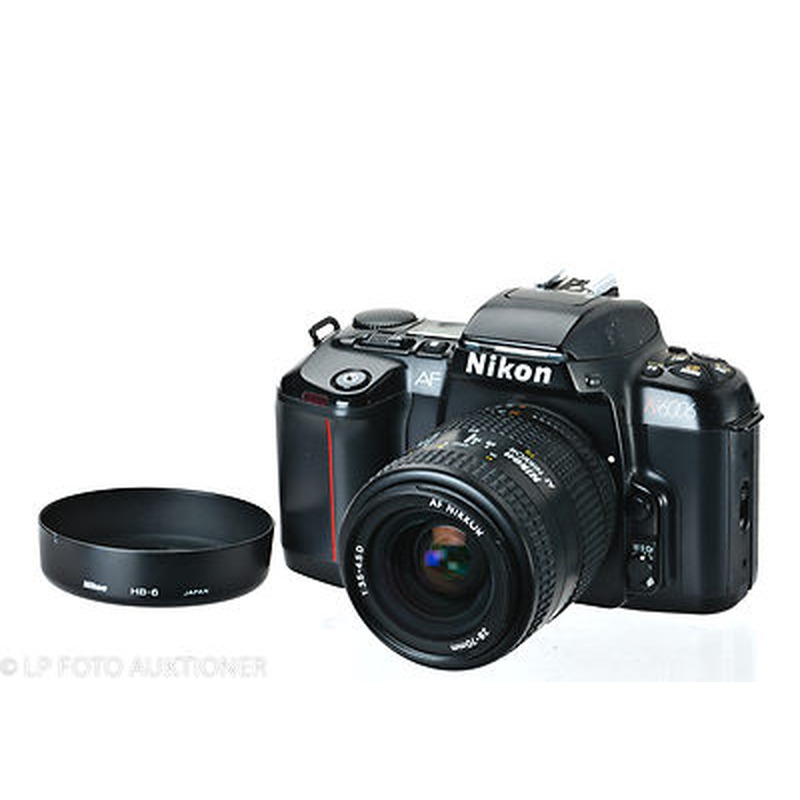
Nikon N6006
Nikon · Japan
The Nikon N6006, also marketed as the F601 in many regions, represents a significant step for Nikon in bringing autofocus technology to the mass market during the late 1980s and early 1990s. As an entry-level 35mm SLR, it departed from Nikon's more advanced manual-focus models like the F3, instead focusing on accessibility. Key features included a compact, lightweight body with prominent grips, Nikon's first matrix metering system for improved exposure accuracy, and a user-friendly command dial interface. It incorporated basic autofocus capabilities with single-shot mode and a predictive autofocus assist for moving subjects, making SLR photography approachable for beginners. The N6006 was Nikon's answer to the burgeoning consumer SLR market, emphasizing ease of use while offering solid, reliable performance at a competitive price point. It lacked the robustness and professional features of Nikon's high-end F-series bodies but was instrumental in familiarizing a new generation of photographers with Nikon's SLR system and autofocus technology. Its design prioritized practicality and cost-efficiency over ultimate build quality.
While not a landmark camera like the Nikon F or F4, the N6006 held importance as Nikon's foundational entry-level AF SLR. It provided essential features like shutter-priority autoexposure, a built-in motor drive, and compatibility with the extensive Nikkor lens lineup. The introduction of matrix metering was a notable advancement for its price bracket, offering more sophisticated exposure control than simpler center-weighted systems. It sold very well, cementing Nikon's presence in the emerging consumer AF SLR market and serving as a gateway model for countless photographers before more advanced models like the N70/F70 emerged. Its legacy lies in its role as a competent, affordable workhorse that successfully brought core SLR and AF functionality to a broad audience.
 Enjoy this museum? Support on Ko-fi