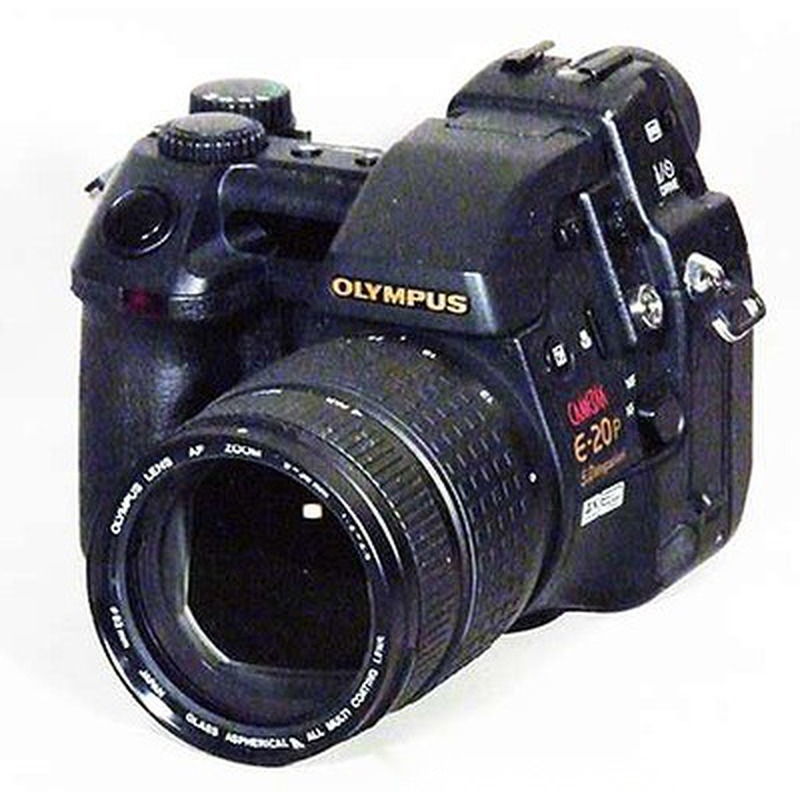
Olympus E-20
Olympus · Japan · 2001 · 135 film
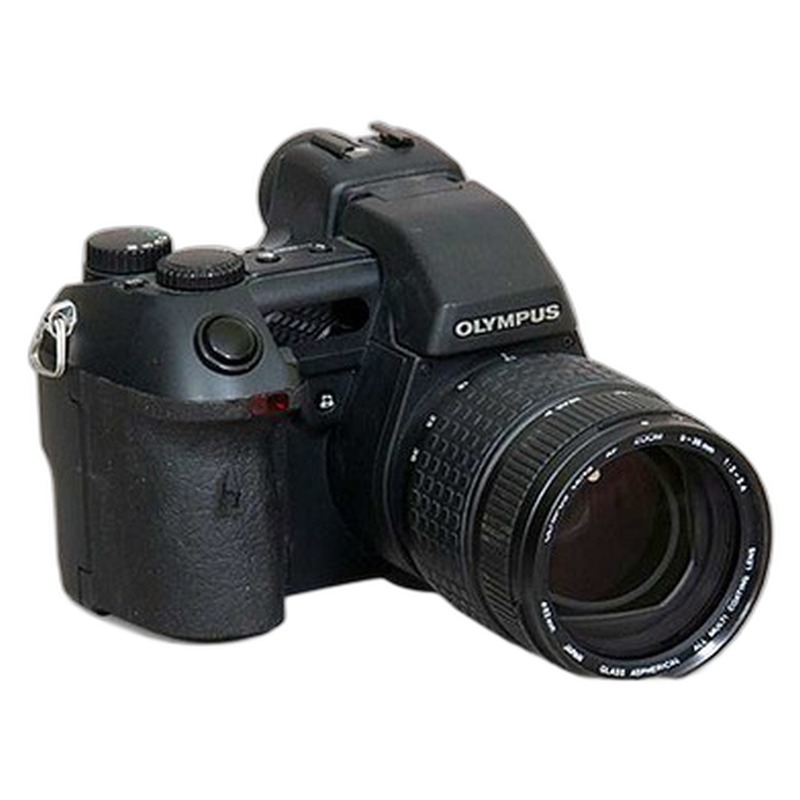
The Olympus E-20 was a significant step for Olympus into the emerging digital SLR market in 2001. Targeted at professional and advanced amateur photographers, it offered a unique non-reflex design utilizing a prism system that provided a true through-the-lens optical viewfinder without the bulk and complexity of a moving mirror and pentaprism found in traditional DSLRs. This "bridge" camera approach housed a then-substantial 5-megapixel CCD sensor, promising image quality competitive with early DSLRs while offering the convenience of a compact, single-body form factor. The E-20 featured a built-in flash, a sturdy magnesium alloy body, and praised color science, positioning it as a high-quality, portable alternative to larger digital systems of the era.
While innovative in its optical design for a digital camera, the E-20 faced challenges, primarily its high launch price and slower operation compared to mirrorless alternatives or traditional DSLRs entering the market. It was a solid, well-engineered product representing Olympus's commitment to optical excellence in the digital transition, but its niche design and cost limited widespread adoption against competitors like Nikon and Canon. The camera maintained Olympus's reputation for superb optics, particularly its Zuiko lenses, and served as a testament to the experimental phase of digital camera development before DSLR conventions became dominant.
Specifications
| Film Format | 135 |
/main.jpg)
/main.jpg)
 Enjoy this museum? Support on Ko-fi