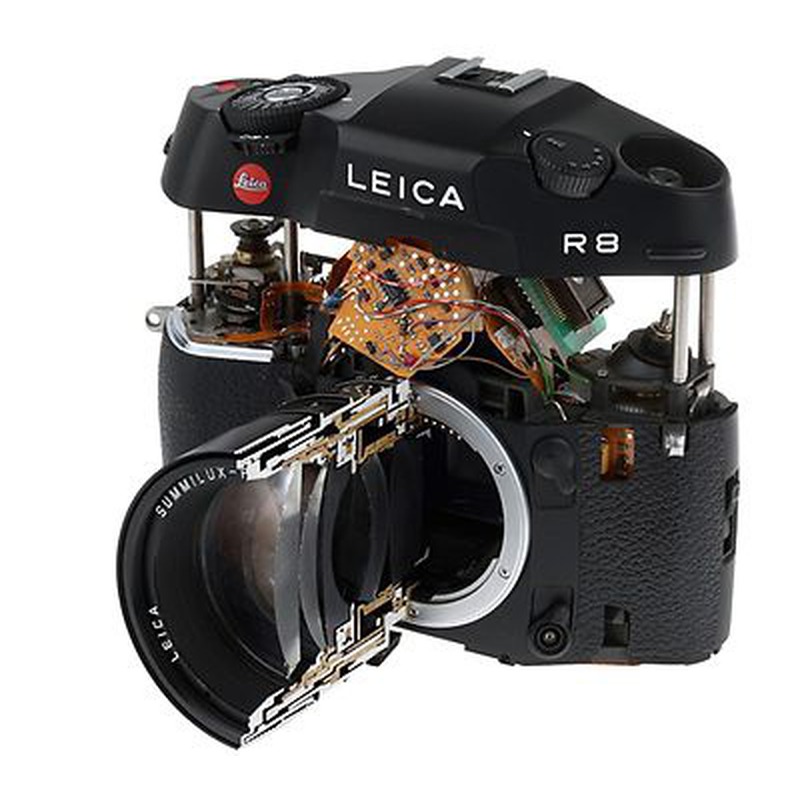
Leica R8 explosion
Leica · Germany · 1996–2000 (4 years) · 135 film
Produced between 1996 and 2000, the Leica R8 represented a significant technological step within the company's R-series of single-lens reflex cameras for the 135 (35mm) format. It departed from the manual focus dominant earlier R models by introducing a fully electronic system, including motorized film transport and integrated exposure metering directly within the pentaprism viewfinder—a notable advancement at the time. Designed to be a versatile professional tool, it offered features like multiple exposure modes, a large, bright finder, and compatibility with Leica's extensive range of R-mount lenses. However, the R8 gained a notorious reputation, earning the moniker "explosion," primarily due to reported issues with the camera backdoor mechanism, which sometimes failed to lock securely, risking light leaks and film exposure. This reliability concern overshadowed its technological ambitions and significantly impacted its reception and market performance.
The R8 embodied Leica's transition towards more electronically controlled SLRs while maintaining its core build quality and ergonomic design principles intended for professionals. Despite its innovative features for its era, particularly the integrated electronics and motorization within a Leica R-body, the persistent problems with the backdoor mechanism cast a long shadow over its legacy. It stands as a complex chapter in Leica's history, showcasing both ambitious engineering and the consequences of unresolved design flaws, ultimately limiting its widespread adoption compared to its predecessors or contemporary SLRs from brands like Canon or Nikon.
Specifications
| Film Format | 135 |
/main.jpg)
 Enjoy this museum? Support on Ko-fi