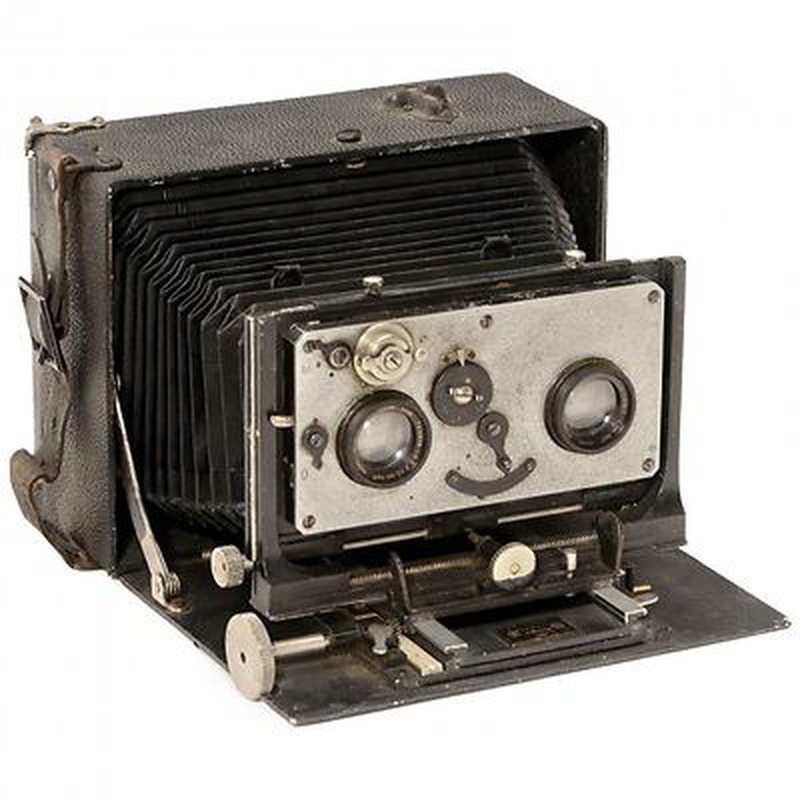
Linhof Stereo Panorama
Linhof · Germany · 1907–1910 (3 years) · 135 film
Produced by the renowned German manufacturer Linhof between 1907 and 1910, the Stereo Panorama holds a notable place in the history of small-format photography. Predating the iconic Leica I by over a decade, this camera represents one of the earliest known attempts to utilize the 35mm (135 format) film strip for practical photography, demonstrating Linhof's early recognition of the advantages of miniature, flexible roll film over bulky glass plates. Designed specifically for stereo (three-dimensional) imaging, it likely featured a dual-lens system to capture slightly offset images simultaneously, a method popular for creating stereoscopic views requiring special viewers. Its production window coincided with a period of intense experimentation before 35mm became widely adopted, making it a significant precursor to the miniature camera revolution that would later define 20th-century photography.
As a product from Linhof, a company synonymous with precision engineering and high-quality equipment, the Stereo Panorama was almost certainly constructed to a very high standard, utilizing robust materials appropriate for the era. Its function was specialized, catering to enthusiasts of stereo photography who sought a more portable solution than the large plate cameras of the time. While details about its exact mechanics, lens specifications, or adoption levels are scarce due to its rarity and the era, its existence underscores Linhof's pioneering spirit and technical capability in miniaturizing photographic equipment. It stands as a fascinating artifact, demonstrating the evolution towards the compact, versatile cameras that would soon transform the photographic landscape.
Specifications
| Film Format | 135 |
/main.jpg)
/main.jpg)
/main.jpg)
 Enjoy this museum? Support on Ko-fi