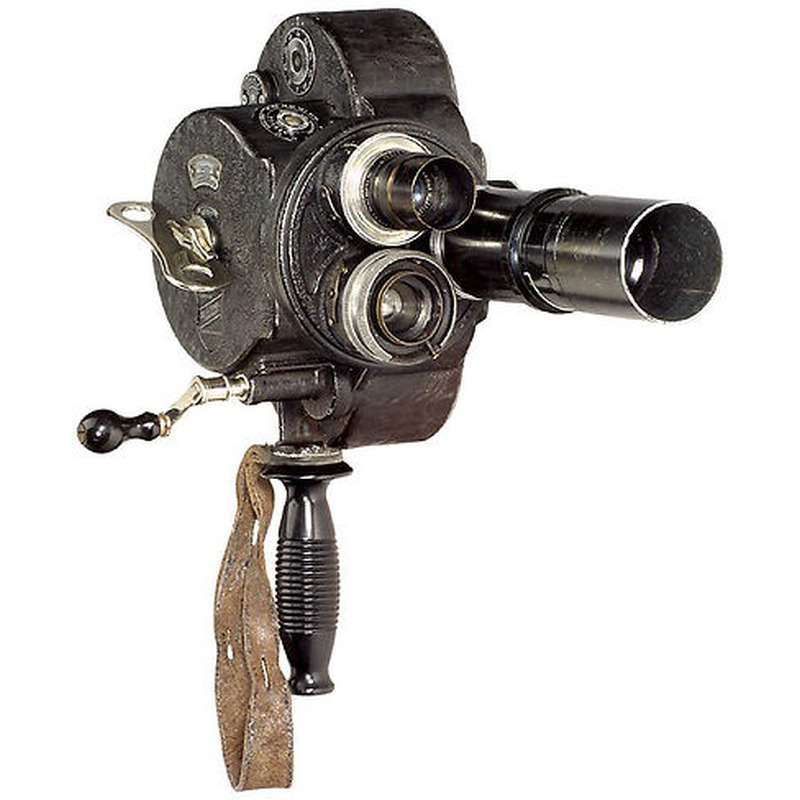
Bell & Howell Eyemo Automatic Cine 71C
Bell & Howell · USA
The Eyemo Automatic Cine 71C represents a pinnacle of professional 35mm spring-wound motion picture camera design during the mid-20th century, solidifying Bell & Howell's reputation as the premier manufacturer of robust, reliable cinematic tools. Descending directly from the iconic Eyemo line that revolutionized portable 35mm filmmaking since its debut in the early 1930s, the 71C model embodies the series' core strengths: exceptional engineering, a simple yet rugged turret design for interchangeable lenses, and the reliability to function in demanding, unpredictable environments, whether on a Hollywood set or a battlefield. Its manual spring-wound mechanism provided consistent speed control and eliminated reliance on bulky external power sources, making it the camera of choice for newsreel photographers, combat correspondents (notably in World War II), and independent filmmakers needing uncompromising performance in a relatively compact package. The 71C's straightforward operation and durability cemented its role in capturing pivotal moments in history and shaping the language of visual storytelling during the golden age of cinema.
Beyond its utilitarian excellence, the Eyemo Automatic Cine 71C holds significant cultural and historical weight. It was the instrument of choice for legendary cinematographers like Gregg Toland, known for his innovative work on films like *Citizen Kane*, and countless combat photographers who trusted its simplicity and dependability under extreme duress. Its design philosophy – prioritizing function, reliability, and optical precision over automation – directly influenced generations of filmmakers and continues to be admired by cinematographers and historians. The camera's association with groundbreaking documentary filmmaking, war reporting, and classic Hollywood productions ensures its place as an enduring symbol of practical, no-compromise cinema craftsmanship, representing an era where the camera was an extension of the photographer's eye and nerve.
/main.jpg)
/main.jpg)
/main.jpg)
 Enjoy this museum? Support on Ko-fi