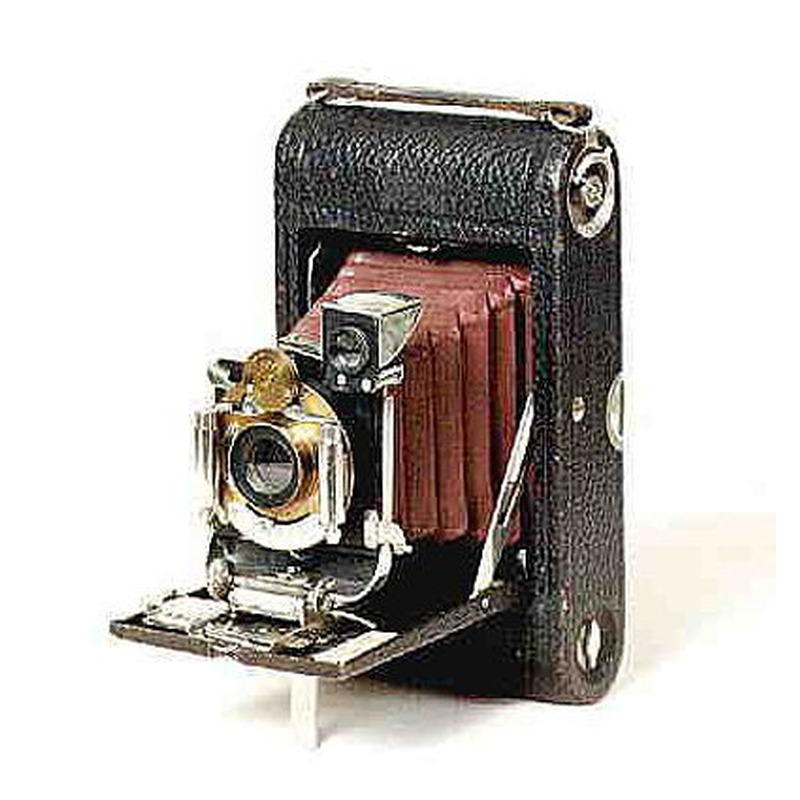
Kodak Folding Pocket No.3 Mod C3
Kodak · USA
The Folding Pocket No.3 Mod C3 represents a typical mid-range folding camera produced by Kodak during the first half of the 20th century, likely within the 1920s or 1930s based on its model designation and Kodak's product evolution. Like other models in the "Pocket No.3" series, it featured a distinctive bellows design allowing the camera to fold into a compact, pocket-sized form factor when not in use, enhancing portability – a significant advantage for amateur photographers of the era. It utilized roll film, probably Type 120 (6x9 cm negatives), making it a practical tool for capturing snapshots and family scenes. Its construction was generally robust for consumer equipment of the time, utilizing materials like leatherette covering and metal fittings, designed for durability under normal use by the general public. The Mod C3 designation suggests it was a specific variant within the broader No.3 line, potentially offering incremental improvements or minor feature adjustments over earlier models, though the exact specifics are undocumented.
This camera exemplifies Kodak's successful strategy of democratizing photography by offering reliable, relatively affordable, and increasingly portable cameras to a mass market. While it lacks the groundbreaking innovation or iconic status of models like the Leica M3 or the Kodak Brownie (which defined the snapshot era), the Folding Pocket No.3 series was crucial in making larger format roll film photography accessible to a wide audience beyond dedicated hobbyists. Its compact folding design was a practical response to the need for cameras that could be carried easily, bridging the gap between simple box cameras and more complex field cameras. As a product of Kodak's immense dominance in the amateur market, the Mod C3 serves as a representative example of the technology and design philosophy that defined mid-level folding cameras during the pre-WWII period, fulfilling its role as a reliable tool for personal photography.
/main.jpg)
 Enjoy this museum? Support on Ko-fi