Pricing
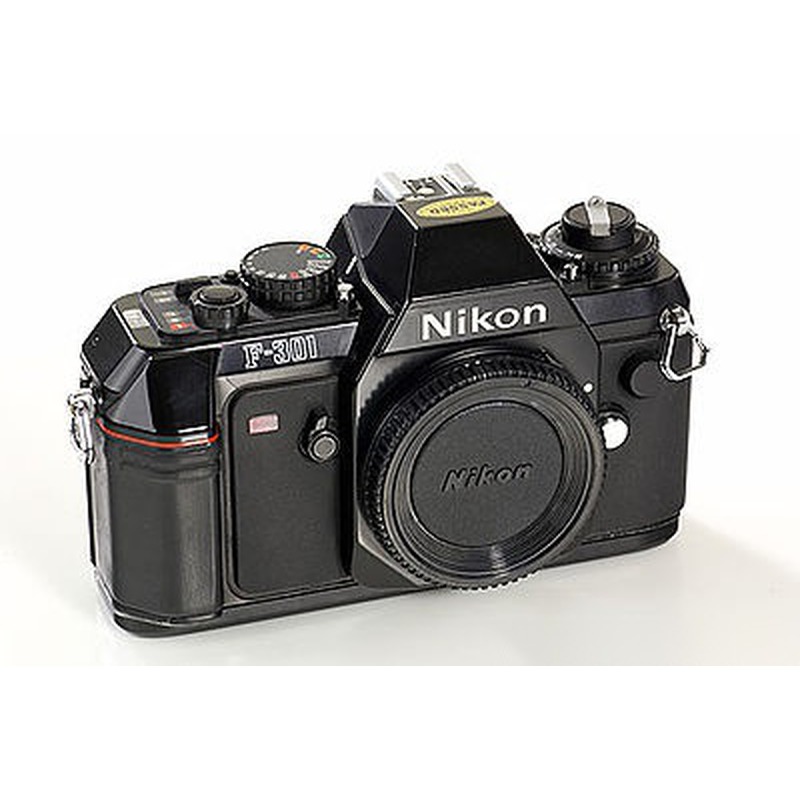
Nikon F-301
Nikon · Japan
The Nikon F-301, marketed as the N2000 in North America, was a mid-1980s entry-level 35mm SLR camera introduced by Nikon in 1985 as the successor to the FG. Positioned as a manual-focused alternative to the contemporary autofocus F-501 (N2020), it shared the same basic body design and core functionalities but omitted electronic autofocus capabilities. Its primary purpose was to offer a straightforward, affordable manual-focus SLR experience to photographers stepping up from compact cameras or earlier basic SLRs. The camera featured a simplified control layout compared to pro models, emphasizing ease of use while retaining essential manual controls like aperture priority automation (with shutter speeds up to 1/2000s) and a match-needle metering system. It represented a significant shift for Nikon towards more compact, polycarbonate-bodied SLRs aimed at a broader market segment, bridging the gap between their high-end F series and simpler fixed-lens cameras.
In character, the F-301 was a competent and reliable workhorse rather than an innovator. It utilized a horizontally traveling cloth shutter, a design choice contributing to its quieter operation and potentially higher flash sync speeds than vertical focal plane shutters of the era. While it lacked the ruggedness or advanced features of Nikon's professional F2 or F3 bodies, it provided solid performance for its intended audience. Its introduction coincided with Nikon's strategic expansion of their consumer SLR lineup in the face of increasing competition, marking a phase where automation features became standard even in entry-level manual-focus models. The F-301 remains a representative example of mid-1980s SLR technology for enthusiasts and students during that period.
 Enjoy this museum? Support on Ko-fi