/main.jpg)
Pricing
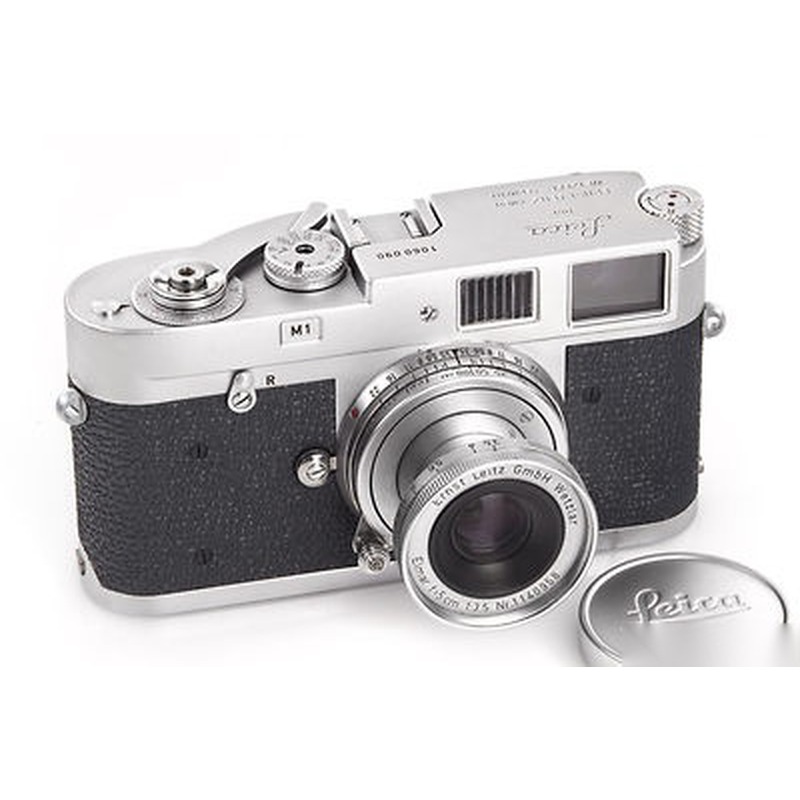
Leica M3 black paint (first batch)
Leica · Germany · 1959 · 135 film
The Leica M3, introduced in 1959, stands as a watershed moment in photographic history, marking Leica's transition from the screw-mount era to the revolutionary M-series. As the first camera to feature Leica's distinctive bayonet lens mount, the M3 represented a fundamental reimagining of what a 35mm rangefinder could be. Building upon the legacy of its predecessors while introducing groundbreaking technology, the M3 was conceived during an era when larger format cameras still dominated professional and artistic photography, yet it would decisively change this paradigm by establishing 35mm as a viable medium for serious work.
The M3's technical innovations were nothing short of revolutionary. Most notably, it introduced the first combined viewfinder and rangefinder system, which provided bright, automatically parallax-corrected frame lines for 50mm, 90mm, and 135mm lenses in a single viewing field. This eliminated the need for cumbersome accessory viewfinders and allowed photographers to compose and focus simultaneously with unparalleled precision and clarity. The camera's magnesium alloy body housed brass components, contributing to both durability and weight distribution, while the rapid-wind lever enabled quiet, efficient operation that proved invaluable for capturing candid moments. These features, executed with meticulous German engineering, set new standards for handling and optical excellence that would influence camera design for decades.
The M3's impact extended far beyond its technical specifications to profoundly shape photographic practice and aesthetics. Its quiet operation and superb optics made it the instrument of choice for countless seminal photojournalists and street photographers, most famously Henri Cartier-Bresson, who utilized the camera to capture decisive moments with unprecedented intimacy and clarity. By the mid-20th century, the M3 had effectively challenged the dominance of larger format cameras, establishing 35mm rangefinder photography as a medium capable of both artistic and documentary significance. Today, examples from the first production run, particularly the scarce black paint variants, represent not just remarkable technical achievements but artifacts of an era that transformed photographic history. The M3's design philosophy—prioritizing optical excellence, mechanical precision, and unobtrusive operation—became the blueprint for subsequent Leica rangefinders and left an indelible mark on camera design across the industry.
Specifications
| Film Format | 135 |
/main.jpg)
 Enjoy this museum? Support on Ko-fi