Pricing
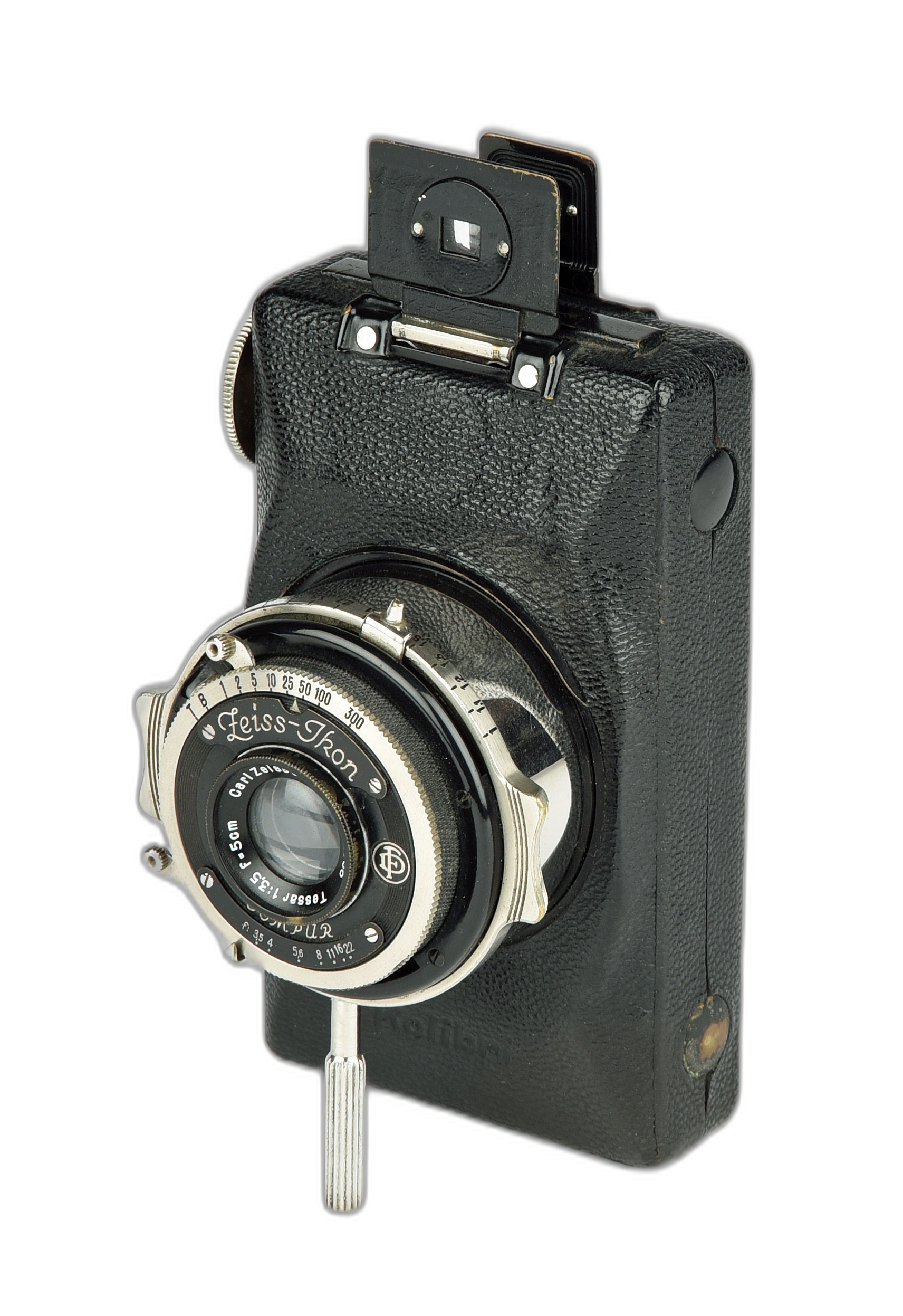
Zeiss Ikon Kolibri
Zeiss
The Zeiss Ikon Kolibri represents a significant entry in the landscape of mid-20th-century amateur photography, produced during an era when 127 roll film dominated the snapshot market. As a product of Zeiss Ikon—a powerhouse formed in 1926 through the merger of German optical and camera firms—it embodies the brand's commitment to precision engineering and accessible design. The Kolibri's name, derived from the hummingbird, hints at its intended portability, targeting casual photographers seeking a lightweight, pocket-sized alternative to bulkier cameras. This model underscores Zeiss Ikon's strategy to democratize photography while maintaining quality, reflecting broader industrial trends toward mass-market camera production in pre-war Europe.
In terms of technical execution, the Kolibri aligns with the utilitarian ethos of 127 film cameras, which typically featured fixed-focus lenses and simple shutter mechanisms optimized for quick, uncomplicated use. While no groundbreaking innovations are documented for this specific model, its construction likely leveraged Zeiss Ikon's optical expertise to deliver sharp, consistent results within the format's 4×4 cm frame dimensions. The camera's design would have prioritized durability and ease of use, with robust metal components to withstand everyday handling—a hallmark of German manufacturing of the period. Notably, Zeiss Ikon's extensive catalog during this time rarely included prominent figures associated with this particular model, suggesting it served primarily as a consumer-grade tool rather than a professional instrument.
Specifications
| Lens / Mount | fixed collapsible lens |
/main.jpg)
/main.jpg)
/main.jpg)
 Enjoy this museum? Support on Ko-fi