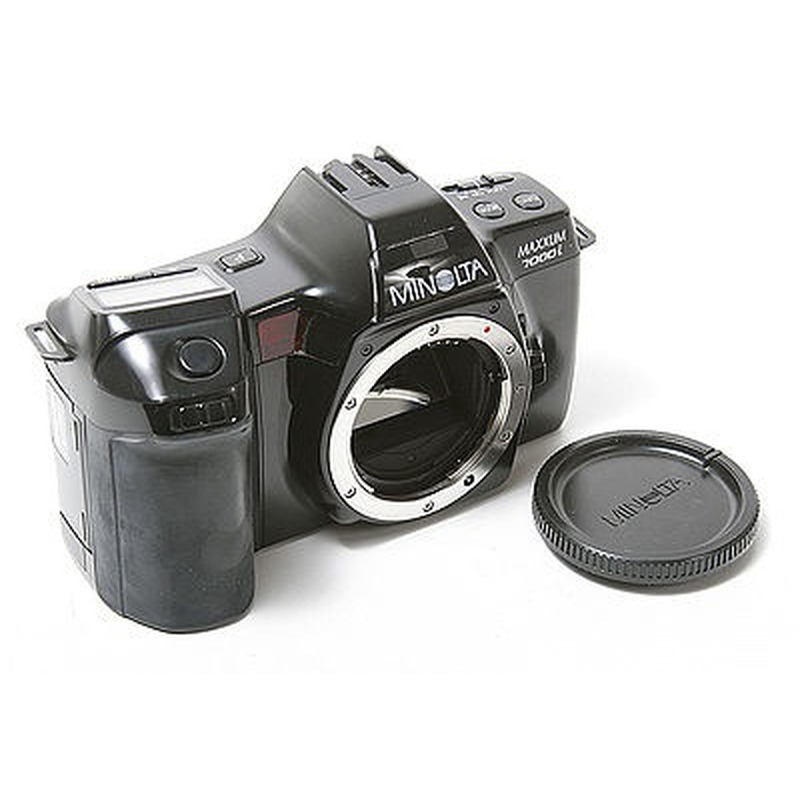
Minolta Maxxum 7000i
Minolta · Japan
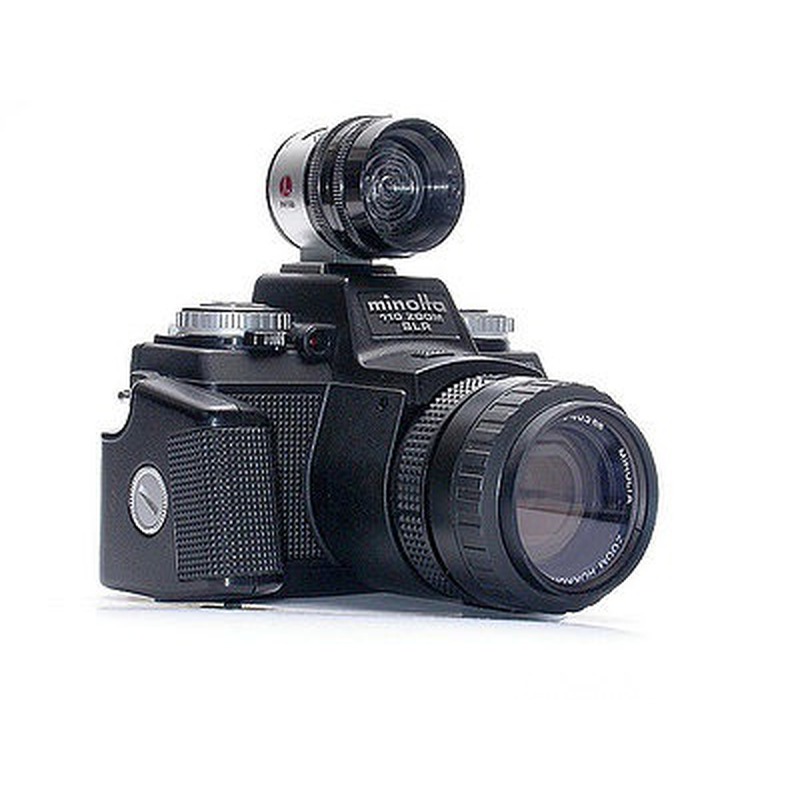
The Maxxum 7000i, introduced by Minolta in 1988, represented a significant advancement in autofocus SLR technology. Building on the legacy of Minolta's groundbreaking original Maxxum 7000 (the first mass-market autofocus SLR), the 7000i introduced innovative features like Minolta's six-segment honeycomb metering system and sophisticated autofocus modes. This camera aimed to bridge the gap between consumer and professional markets, offering advanced automation—including program AE, shutter-priority, aperture-priority, and manual modes—while maintaining a user-friendly interface. Its robust metal construction and compatibility with Minolta's extensive Maxxum lens system made it a versatile tool for serious amateurs and semi-professionals during the late 1980s.
While not as historically transformative as the original Maxxum 7000, the 7000i refined autofocus and automation capabilities that became industry standards. It featured Minolta's "i" technology for intelligent flash metering and customization options, catering to photographers seeking greater control without sacrificing automation. Though overshadowed by later Minolta models and competitors like Canon and Nikon, it remains a notable example of 1980s SLR innovation, demonstrating the rapid evolution of camera electronics during the film era. Its design and functionality reflected the industry's shift toward sophisticated, user-friendly autofocus systems that defined Minolta's market presence at the time.
/main.jpg)
/main.jpg)
 Enjoy this museum? Support on Ko-fi