/main.jpg)
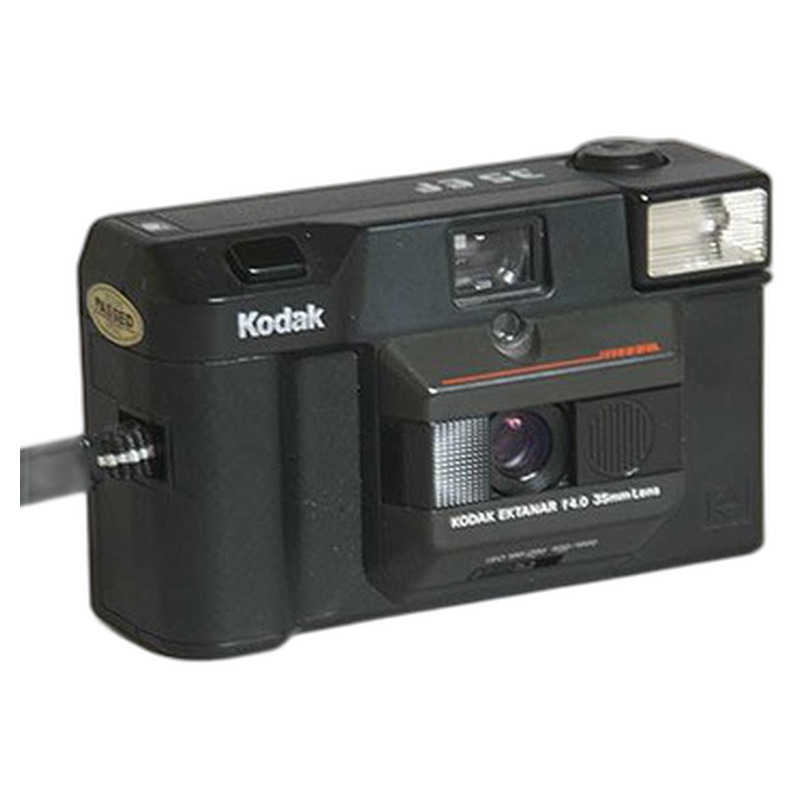
Kodak Retina IIIc (021 II)
Kodak · USA
The Kodak Retina IIIc (021 II) represents a pinnacle of American engineering in the post-war era of 35mm photography. Emerging from Kodak's significant Retina line, which debuted in 1934 as Kodak's first serious assault on the burgeoning small-camera market dominated by German makers like Leica and Contax, the IIIc model was a top-tier precision instrument. It features a coupled rangefinder system integrated into a compact body, facilitating accurate focusing crucial for the sharpness demands of 35mm negatives. Its core innovation lies in this coupled rangefinder, which directly linked the viewfinder's alignment to the lens's focusing helical, providing a bright, magnified view and significantly enhancing focusing speed and precision compared to scale-focus competitors. The camera utilizes the reliable Synchro-Compur shutter, offering speeds from 1 second to 1/500th, plus B, and synchronized flash via a PC terminal. Constructed from durable materials like metal and robust leatherette covering, the Retina IIIc embodies the mid-century ethos of premium, hand-assembled quality combined with user-friendly design, making sophisticated photography accessible to dedicated enthusiasts.
As a member of the renowned Retina family, the IIIc (021 II) holds considerable importance in the history of portable 35mm photography. Kodak's Retina series was instrumental in popularizing the 35mm format beyond professional circles and pioneering the development of the 35mm cassette, simplifying film loading. The IIIc model specifically catered to advanced amateurs seeking a high-quality, compact alternative to bulkier cameras, embodying the convergence of American manufacturing precision and German-inspired optical innovation. Its role in democratizing advanced photography, coupled with its sophisticated mechanical engineering and production scale, solidifies its place as a significant, though sometimes overshadowed, contributor to the evolution of the 35mm camera.
/main.jpg)
 Enjoy this museum? Support on Ko-fi