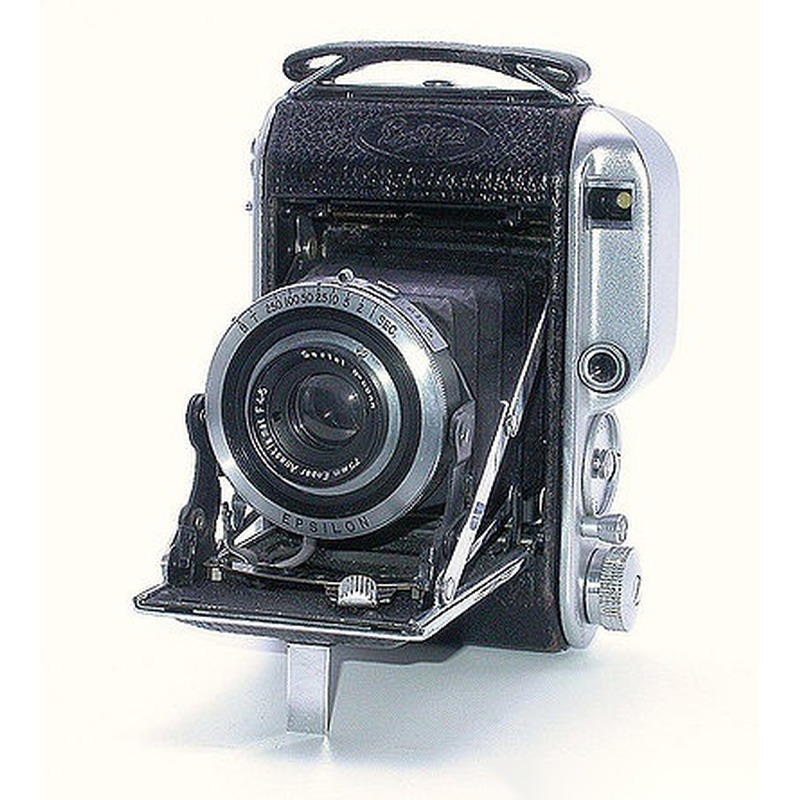
Houghton Ensign Autorange 220
Houghton · UK
The Ensign Autorange 220 is a medium format camera produced by the British manufacturer Houghton, operating within their known product line of rollfilm cameras for the amateur and serious amateur market of the mid-20th century. Characteristic of Houghton's practical approach, it likely features a body constructed from pressed metal or a combination of metal and synthetic materials, typical of cameras of its presumed era (potentially 1940s-1960s). Its name suggests an automatic exposure feature ("Autorange"), which would have been a notable but not revolutionary advancement for the time, aiming to simplify operation for users stepping up from simpler box cameras. Designed primarily for 120 roll film, it probably offered a range of negative sizes, likely 6x6 cm or 6x9 cm, catering to photographers desiring higher image quality than 35mm formats could provide at launch. While exact specifications are elusive, the Autorange 220 represents Houghton's effort to compete in the evolving mid-century market by incorporating convenience features like automated exposure control alongside the established quality of medium format negatives.
As a product of Houghton, a significant but not dominant player in the British optical industry, the Autorange 220 embodies the company's reputation for producing competent, user-friendly cameras rather than being a benchmark for technological innovation or iconic design. Its design would focus on functionality and robustness for everyday use, likely featuring a simple folding bellows or rigid body with a fixed or limited range lens, standard for its class. Its historical significance lies in representing a typical mid-tier offering from a notable British manufacturer during a period when medium format rollfilm remained a popular choice for enthusiasts before the rise of affordable 35mm SLRs. It serves as an example of the practical, feature-oriented approach to camera design that bridged the gap between simple box cameras and more complex professional equipment.
 Enjoy this museum? Support on Ko-fi