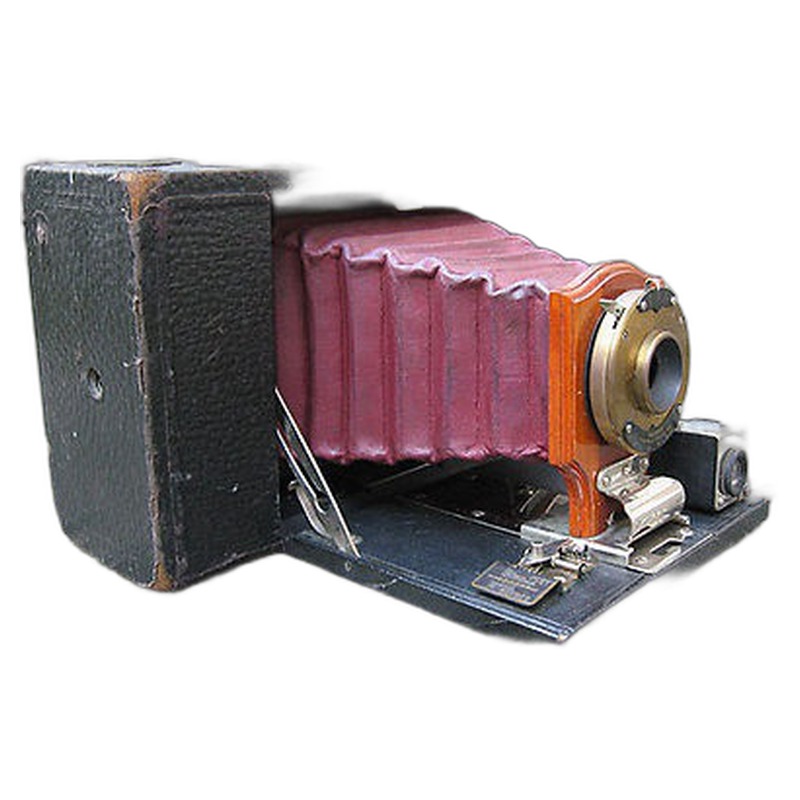
Kodak Folding Brownie No.3 Model C
Kodak · USA
The Kodak Folding Brownie No.3 Model C represents a significant step in Kodak's mission to make photography accessible to the masses during the early 20th century. Part of the extensive Brownie line, which revolutionized amateur photography by offering simple, affordable cameras using roll film, this model featured a folding bellows design. This allowed for a relatively compact and portable package compared to rigid box cameras, making it easier to carry. Like other Brownies, it utilized a simple meniscus lens and a rotary shutter, operated via a pneumatic bulb, emphasizing ease of use over optical precision. Its construction was typical for the era: a body made from wood covered in black leatherette (or similar material), metal hardware, and bellows made from fabric and leather. The camera was designed for 120-type roll film, producing negatives of a specific format consistent with Kodak's amateur roll-film standards. While not a precision instrument, its affordability and simplicity empowered countless individuals to document their lives and landscapes, cementing its role as a foundational tool in popular photography.
This camera exemplifies Kodak's dominance in the amateur market during the period before and just after World War I. The Folding Brownie series bridged the gap between the very simple box Brownies and more sophisticated folding cameras like the No.1A Pocket Kodak. Its design prioritized user-friendliness and reliability for casual use over advanced features. Owning a Folding Brownie No.3 Model C meant entering the world of snapshot photography without significant technical knowledge, fulfilling George Eastman's vision of "You press the button, we do the rest." It stands as a testament to the era's democratization of the medium, even as it represents a basic level of photographic capability by later standards.
/main.jpg)
 Enjoy this museum? Support on Ko-fi