/main.jpg)
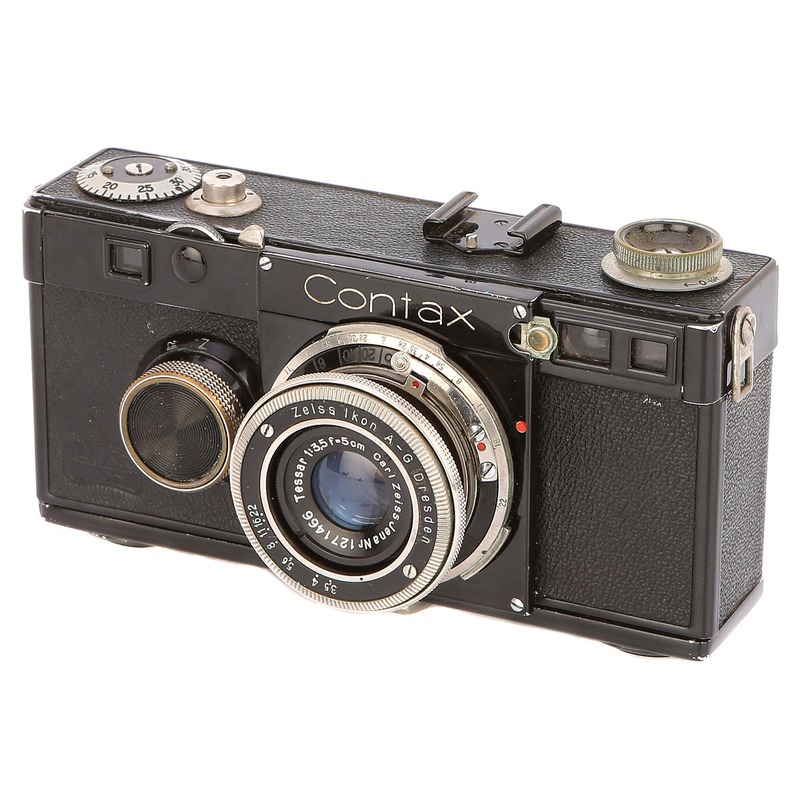
Zeiss Contax I (demo)
Zeiss · Germany · 1932–1936 (4 years) · 135 film
Zeiss's Contax I (1932–1936) emerged as a formidable response to the burgeoning Leica phenomenon, representing a sophisticated and technologically advanced entry into the 35mm precision camera market. Conceived as a flagship model, it departed significantly from Leica's simpler designs, featuring a robust, die-cast metal body and a sophisticated focal plane shutter offering speeds up to 1/1000th second. Its most notable innovation lay in its exceptional interchangeable lens system, utilizing bayonet mounts with precision helicoid focusing barrels developed by Zeiss's renowned optical division, ensuring superior optical performance and flexibility. The Contax I was engineered for professional and serious amateur photographers, incorporating features like a coupled rangefinder (improved over early prototypes), a rapid film winding knob, and a removable back for convenient film loading, setting new standards for miniaturized camera construction and performance. Its development marked a pivotal moment, demonstrating Zeiss's commitment to competing directly with Leica on technical merits while leveraging its optical prowess.
While sharing the 135 format with the Leica, the Contax I represented a distinct engineering philosophy prioritizing durability, intricate mechanics, and the seamless integration of Zeiss optics. Its construction was notably complex, involving numerous meticulously manufactured parts contributing to significant weight compared to contemporaries. This complexity, however, translated into exceptional build quality and a reputation for precision operation, albeit requiring careful handling. The camera garnered respect among discerning photographers of the era for its ability to deliver high-quality results with a wide array of Zeiss lenses, establishing Contax as a prestigious brand synonymous with German engineering excellence. Its production run, though relatively short and later succeeded by the Contax II/III models, cemented its legacy as a foundational and historically significant camera that shaped the evolution of the 35mm format.
Specifications
| Film Format | 135 |
/main.jpg)
/main.jpg)
/main.jpg)
 Enjoy this museum? Support on Ko-fi