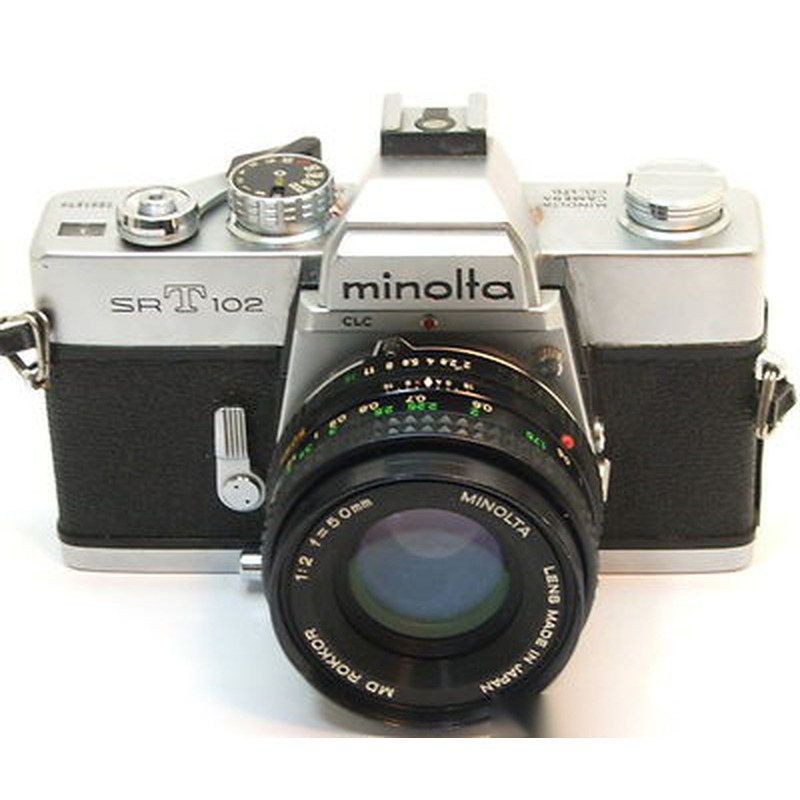
Minolta SRT-102
Minolta · Japan
Introduced in the early 1970s as a refined successor to the SRT-101, the Minolta SRT-102 solidified Minolta's reputation as a maker of robust and feature-packed 35mm single-lens reflex (SLR) cameras. It was a quintessential workhorse SLR of the era, embodying the practical values that defined mainstream photography during the film boom. Key to its identity was Minolta's pioneering implementation of through-the-lens (TTL) full-aperture metering, integrated into the venerable SR mount bayonet lens system. This allowed accurate metering regardless of the lens attached, a significant step forward for photographers using interchangeable lenses. The SRT-102 featured a bright, accurate split-image rangefinder microprism focusing screen coupled with a match-needle selenium meter display visible in the viewfinder, providing reliable exposure control in a sturdy, all-metal body.
While not reaching the legendary status of some contemporaries, the SRT-102 was exceptionally well-regarded for its dependable build quality, intuitive controls, and excellent Minolta Rokkor optics, making it a favorite among advanced amateurs, students, and professional journalists alike. Its robust construction, featuring alloy and metal components, contributed to a reputation for durability that many cameras today lack. The model's longevity on the market (produced for over a decade) and widespread adoption underscore its success and importance in popularizing TTL metering and SLR photography for a broad audience. It represented Minolta's commitment to accessible, high-quality photographic technology during a transformative period.

/main.jpg)
/main.jpg)
 Enjoy this museum? Support on Ko-fi