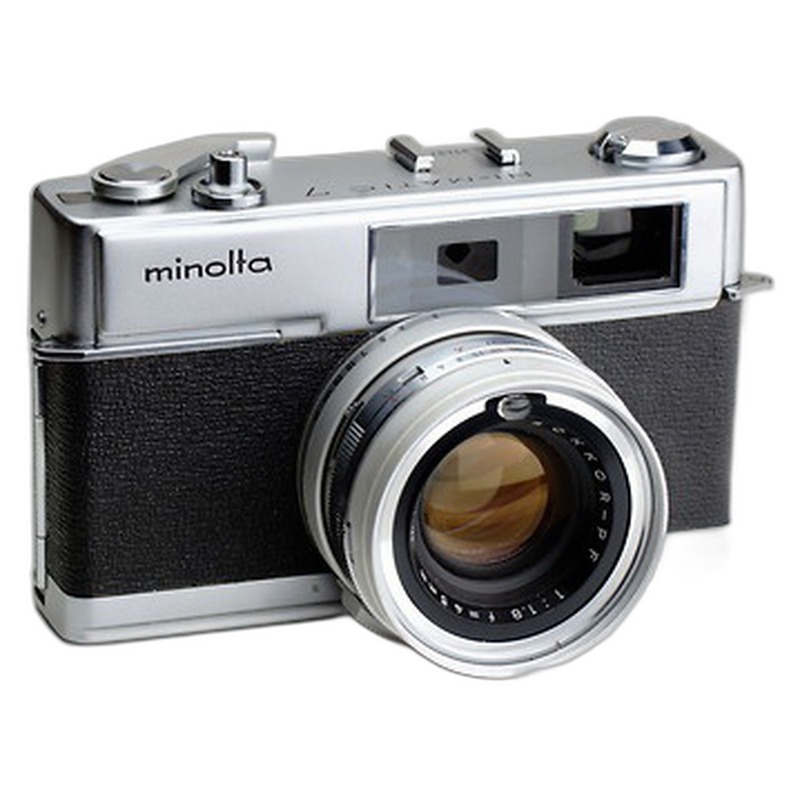
Minolta Hi matic 7
Minolta · Japan
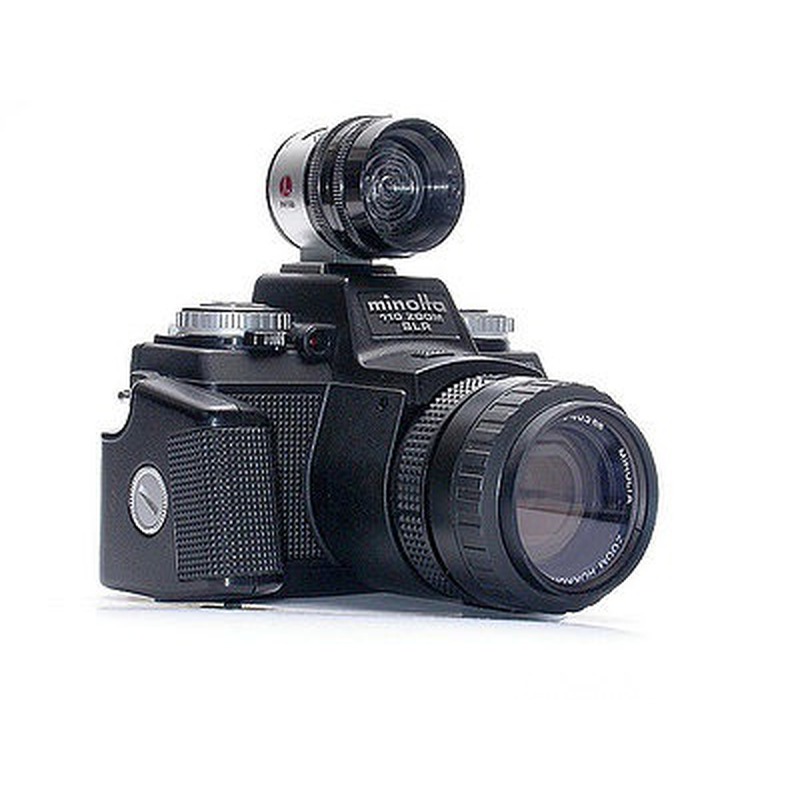
The Minolta Hi-matic 7 represents a significant step forward in affordable, user-friendly photography during the 1960s. As part of Minolta's successful Hi-matic series of compact rangefinder cameras, it offered automatic exposure control to a broad consumer audience who previously relied on simpler, manual cameras. Its design emphasized ease of use, featuring a coupled rangefinder for accurate focusing and a fixed or limited-focus 45mm lens, providing sharp images with minimal effort. The camera utilized selenium light meters common in its era, powering its CdS (cadmium sulfide) cell-based exposure system, which automatically selected aperture or shutter speed, significantly reducing technical barriers for snapshot photographers. This combination of automation and portability positioned the Hi-matic 7 as a practical tool for everyday picture-taking, contributing to the democratisation of photography for families and casual users.
While not featuring the groundbreaking innovation of some contemporaries, the Hi-matic 7 excelled in its intended role: delivering reliable, fuss-free results for the mass market. Its construction was typical of mid-range compact cameras of the time, balancing durability with cost-effectiveness using metal bodies and synthetic materials. The camera gained considerable popularity for its reliability and straightforward operation, becoming a common sight in households and tourist spots worldwide. It exemplifies the era's shift towards greater automation in photographic equipment, paving the way for the increasingly sophisticated compact cameras that would follow. Its enduring presence as a used camera today speaks to its robust build for consumer expectations and its role as a reliable photographic workhorse for millions.
/main.jpg)
/main.jpg)
 Enjoy this museum? Support on Ko-fi