Olympus Flex All
Olympus · Japan · 1956–1957 (1 years) · 135 film
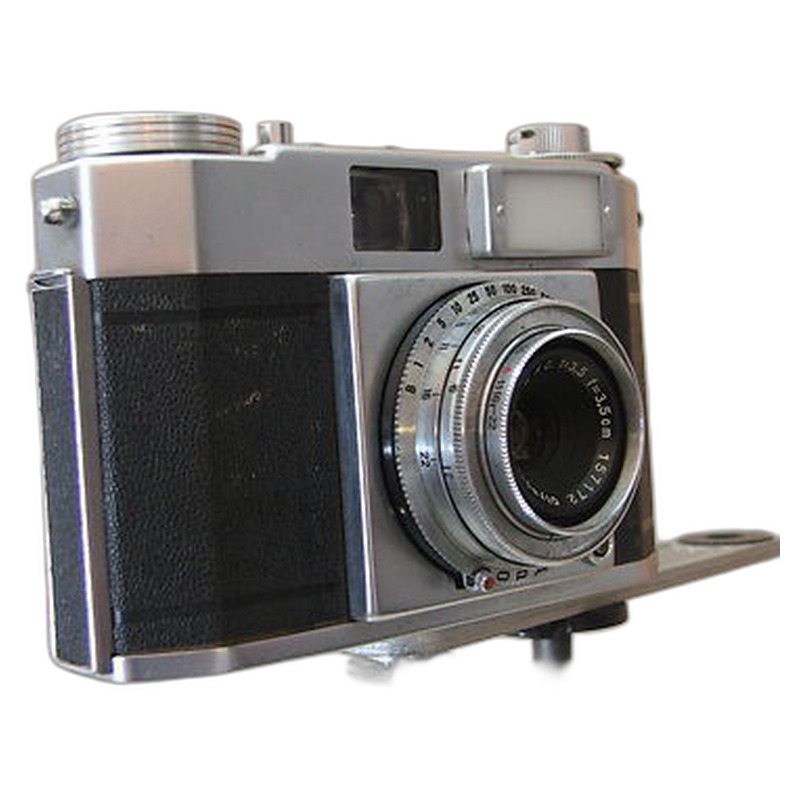
The Olympus Flex All represents an interesting mid-century innovation from Olympus, a 35mm twin-lens reflex (TLR) camera produced between 1956 and 1957. While Olympus was already established in the 35mm market with its Pen series (starting in 1959) and would later achieve fame with the OM system, the Flex All occupies a niche position as a relatively rare example of a 35mm format TLR. TLR cameras were overwhelmingly popular in medium formats like 120 roll film, offering convenient waist-level viewing and a reflex focusing system. Applying this design to the compact 135 cartridge was unusual and likely aimed at photographers desiring the TLR experience within the increasingly popular 35mm frame. Its construction, typical of Olympus products of the era, utilized metal bodies for durability, coupled with a pair of lenses – one for viewing and focusing, the other for exposure – and a top-down reflex finder. The camera offered a straightforward shooting experience characteristic of TLRs, making it a distinct, if ultimately uncommon, offering in Olympus's early 35mm portfolio.
As a product of the mid-1950s, the Olympus Flex All arrived before the company's major global breakthroughs but demonstrated their willingness to explore diverse camera formats. Its significance lies primarily as a curious footnote in Olympus's evolution, showcasing their experimentation beyond the standard 35mm rangefinder or SLR designs that would define their later success. It stands as a competent, well-built 35mm TLR of its time, representing a specific technical solution to a niche desire, but it did not introduce features that profoundly shaped photographic practice or achieve widespread acclaim like contemporaries from Nikon or Leica. Its production run was relatively short, contributing to its rarity today without elevating it to legendary status.
Specifications
| Film Format | 135 |
/main.jpg)
/main.jpg)
 Enjoy this museum? Support on Ko-fi